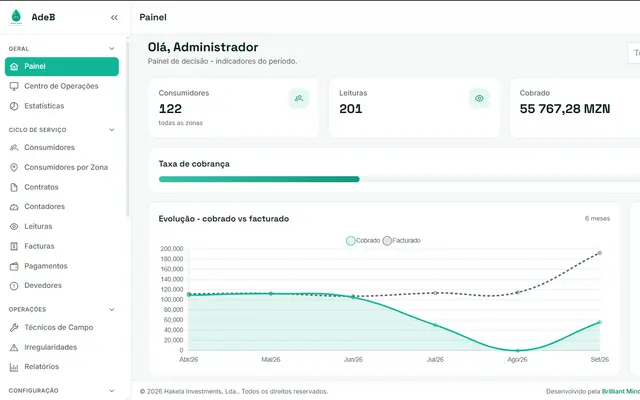
The problem with spreadsheets
Many water utilities still record consumers, readings and payments on paper and in spreadsheets. It works while there are few customers. Then typing errors, late invoices and debts that nobody can add up start to appear.
1. A single registry of consumers and contracts
The first step is to have every consumer, contract, meter and zone in one place, with history. It is the base of everything else: without a reliable registry, the invoice comes out wrong.
2. Field readings, even without a signal
The technician carries the day's route on the phone and records each reading on site, with a photo and location. In areas without coverage, the reading is stored on the device and syncs when a connection is available.
This ends the lost sheet of paper and the double typing in the office.
3. Billing from the reading
With the reading recorded, the system calculates consumption, applies the tariff (including tiers) and generates the invoice. Late-payment penalties and adjustments are recorded, with no manual sums.
4. Payment by mobile phone
Letting consumers pay their invoice by M-Pesa or e-Mola reduces queues and delays. The utility then sees, on the dashboard, who paid, who owes and for how many months.
5. Dashboards to decide with
Collection by zone, consumption by period and the list of debtors show where to act first. Abnormal consumption helps detect leaks and irregular connections.
Where to start
Start by importing your consumer base and defining zones and tariffs. Then test the reading route in a pilot zone.
Hakela was built for this path. Get in touch for a demo.


Written by Brilliant Mind Systems
A Mozambican partnership of young academics who build websites, systems and apps for companies and institutions.
Keep reading
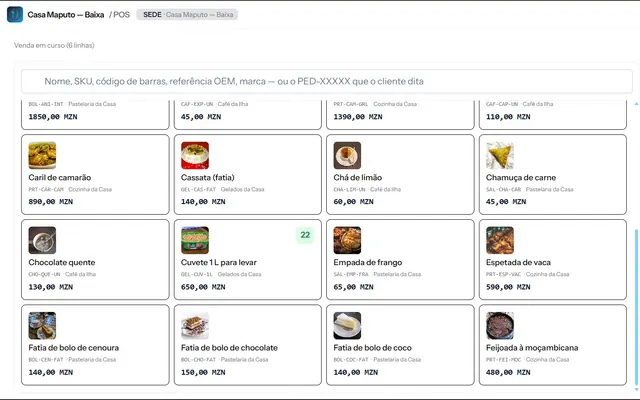
How to choose a POS system in Mozambique
Six questions to compare point-of-sale systems: offline operation, M-Pesa and e-Mola payments, NUIT invoicing, stock, reports and support.
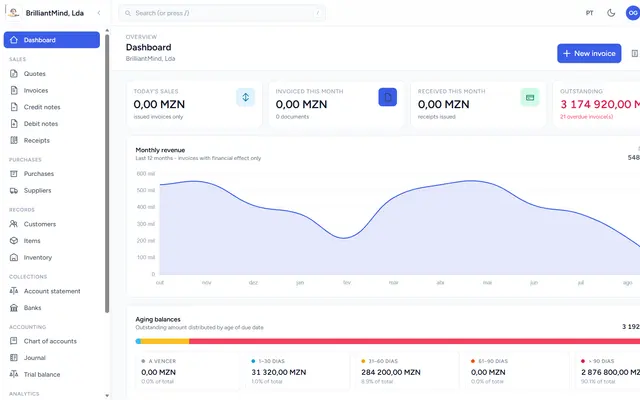
Invoicing software for SMEs: what to look for before you choose
Invoices, receipts, stock and accounting in one system: what to check in invoicing software for your SME in Mozambique.